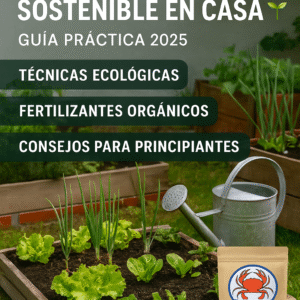
Cómo empezar un huerto urbano sostenible en casa 🌱 Guía completa 2026
Aprende a producir tus propios alimentos en casa con bajo presupuesto y técnicas ecológicas: mezcla 40/40/20, riego eficiente, fertilización orgánica y prevención de plagas. Guía extendida con calendario, checklist, tabla de cultivos y plan semanal.
Índice
- Por qué tener un huerto urbano
- Elegir el espacio ideal
- Macetas y contenedores recomendados
- Mezcla de sustrato 40/40/20
- Fertilización orgánica inteligente
- Riego eficiente y conservación de agua
- Tabla de cultivos recomendados
- Plan de 7 días para comenzar
- Errores comunes
- Manejo preventivo de plagas
- Calendario de cultivos urbano
- Checklist imprimible
- Preguntas frecuentes
🌿 Por qué los huertos urbanos son tendencia
Crear un huerto urbano no es solo sembrar plantas. Es recuperar conexión con la naturaleza, mejorar la alimentación y contribuir a un estilo de vida sostenible.
- ✔️ Alimentos frescos sin químicos
- ✔️ Menos estrés visual y mental
- ✔️ Mejor calidad del aire
- ✔️ Ahorro real en verduras y aromáticas
- ✔️ Reutilizas residuos para composta
📍 1) Elegir el espacio ideal
El éxito empieza por la luz. Sin luz adecuada, no hay huerto exitoso.
Recomendación de sol:- 🌱 Hojas (lechuga, espinaca): 4–5 h
- 🍅 Frutos (tomate, chile, pepino): 6–8 h
Si tu balcón recibe fuerte sol en la tarde, coloca malla sombra ligera (30–50%).
🪴 2) Macetas y contenedores
Más volumen = raíces más fuertes y riego más estable.
| Tipo | Ideal para |
|---|---|
| 20–25 cm | Hierbas y hojas |
| 30–40 cm | Chiles y jitomate cherry |
| Huacales / jardineras | Producción continua |
🌱 3) Mezcla de sustrato 40/40/20
40% tierra negra + 40% composta + 20% arena o perlita
Opcional: añade musgo sphagnum para climas secos.
—🌿 4) Fertilización orgánica inteligente
Se recomienda fertilizar poco, pero seguido.
- Humus de lombriz cada 15 días
- Composta mensualmente
- Harina de jaiba (quitina) → raíces fuertes y defensa natural
- Preventivo: 1 cda cada 15 días
- Floración y frutos: 1–2 cdas cada 10 días
💧 5) Riego eficiente
La clave es humedad constante sin encharcar.
- Riego por la mañana
- Usa plato con grava
- Instala goteo casero (botella + manguera)
- Mulch: hojas, paja o cartón picado
🥦 Tabla de cultivos recomendados
| Cultivo | Sol | Tips |
|---|---|---|
| Tomate cherry | 6–8 h | Tutor y riego constante |
| Lechuga | 4–6 h | Riegos diarios y sombra ligera |
| Rábano | 4–5 h | Rápido y rendidor |
| Albahaca | 5–6 h | Odia frío |
📅 Plan de 7 días para empezar
Día 1: Mide horas de sol
Día 2: Elige macetas
Día 3: Compra sustrato
Día 4: Prepara mezcla
Día 5: Siembra 2 hojas + 1 raíz
Día 6: Instala goteo
Día 7: Primera fertilización y foto
—⚠️ Errores comunes
- Regar de noche
- Poco drenaje
- Sembrar demasiado al inicio
- No medir sol real
🐞 Manejo de plagas
Prevención = plantas sanas + riego temprano + ventilación.
—📆 Calendario de huerto urbano
Primavera: Tomate, chile, albahaca
Verano: Sombra ligera + riegos tempranos
Otoño: Rábano, acelga
Invierno: Lechuga, espinaca
—✅ Checklist imprimible
- ☑ 3 macetas 25–30 cm
- ☑ Sustrato 40/40/20
- ☑ Compost o humus
- ☑ Mulch
- ☑ Regadera o goteros
- ☑ Harina de jaiba
❓ Preguntas frecuentes
¿Con 4 horas de sol puedo?
Sí: hojas y aromáticas.¿Cada cuánto riego?
Diario en calor, 2–3 días en frío.¿Qué fertilizante usar?
Orgánicos como humus + harina de jaiba.Versión en inglés abajo 👇
Urban Home Garden 2026 Guide 🌱
Learn how to start a productive balcony or small-space garden…
Urban Home Garden 2026: The Complete Beginner’s Guide 🌱
Build a productive, eco-friendly garden in a balcony, rooftop, or small patio using a simple 40/40/20 mix, smart watering, organic fertilization, and preventative care. Extended edition with a printable checklist, crop tables, seasonal calendar, and a 7-day quickstart plan.
Table of Contents
- Why Urban Gardens Are Booming
- Pick the Right Space
- Containers That Actually Work
- The 40/40/20 Soil Mix
- Organic Fertilization That Scales
- Smart Watering & Moisture Control
- Best Crops for Small Spaces
- Your 7-Day Quickstart Plan
- Common Mistakes (and Fixes)
- Preventing Pests the Easy Way
- Seasonal Calendar (Temperate Zones)
- Printable Checklist
- FAQs
🌍 Why Urban Gardens Are Booming
Urban gardening blends wellness, food quality, and sustainability. It stretches grocery budgets, reduces waste, cools down interiors, and adds greenery that genuinely lowers stress. Most importantly, it lets you harvest on demand—peak flavor, peak nutrition.
- ✔️ Fresher, chemical-free greens and herbs
- ✔️ Daily connection to nature (proven mental health benefits)
- ✔️ Lower food costs for high-margin items (herbs, leafy greens)
- ✔️ Greener microclimates: less dust, better airflow
- ✔️ Less plastic packaging and food waste
📍 1) Pick the Right Space
Light is your engine. Without enough light, plants stall. Measure real sun hours for a week.
- Leafy greens: 4–5 hours of direct sun
- Fruiting crops (tomatoes, peppers): 6–8 hours
If afternoons hit hard, use 30–50% shade cloth from 3–5 pm. Check wind and weight limits for balconies/rooftops.
🪴 2) Containers That Actually Work
Root volume stabilizes moisture and nutrition. Go bigger than you think.
| Size / Type | Best For |
|---|---|
| 8–10” (20–25 cm) pots | Herbs, lettuces, greens |
| 12–16” (30–40 cm)+ | Tomatoes, peppers, eggplant |
| Window boxes / crates | Continuous greens and radishes |
Multiple drainage holes + a gravel-lined tray prevent soggy roots. Repurpose containers only if food-safe and perforable.
🌱 3) The 40/40/20 Soil Mix
40% garden soil + 40% compost + 20% sand or perlite strikes the balance: structure, nutrients, and drainage. In hot/dry climates, add sphagnum moss for water retention.
- Keep it airy—roots need oxygen.
- Refresh with 10–20% compost each month.
- Avoid compacted mixes and heavy clay.
🌿 4) Organic Fertilization That Scales
In containers, nutrients deplete faster. Think “steady micro-doses.” Combine compost or worm castings with mineral-rich organic meals that release gradually.
- Humus/worm castings every 2 weeks
- Compost monthly top-dress
- Crab shell meal (chitin) to boost roots and natural resilience
- Preventive: 1 tbsp per 8–10” pot every 2 weeks
- Bloom/Fruiting: 1–2 tbsp every 10–15 days
- New mixes: 1–2% of total volume
💧 5) Smart Watering & Moisture Control
Consistent moisture beats flood-and-dry cycles. Water early morning; avoid night watering to reduce fungal pressure.
- Use trays with gravel to prevent root rot
- DIY drip: bottle + microtubing + drippers
- Mulch: straw, shredded leaves, or coco chips
- In heat waves, water lightly twice a day
🥦 6) Best Crops for Small Spaces
| Crop | Sun | Water | Pro Tip | Common Issue | Prevention |
|---|---|---|---|---|---|
| Cherry tomato 🍅 | 6–8 h | 3×/week | Stake + crab meal pre-bloom | Powdery mildew | Airflow + morning watering |
| Lettuce 🥬 | 4–6 h | Daily | Partial shade in summer | Bolting | Keep cool; harvest young |
| Radish 🌿 | 4–5 h | Every 2 days | Sow weekly for continuity | Hollow roots | Even moisture + quick harvest |
| Basil 🌱 | 5–6 h | 2×/week | Pinch tops for bushy growth | Whitefly | Soap spray + airflow |
📅 7-Day Quickstart Plan
Day 1: Measure sun hours and wind.
Day 2: Choose containers + layout.
Day 3: Buy soil, compost, mulch.
Day 4: Mix 40/40/20; pre-moisten.
Day 5: Sow two greens + one root crop.
Day 6: Install DIY drip or watering routine.
Day 7: First preventive feeding (crab meal), take photos, and log observations.
⚠️ Common Mistakes (and Fixes)
- Overwatering: ensure drainage and water mornings.
- Too little sun: choose greens if under 5 hours.
- Planting everything at once: start with 3–4 easy crops.
- Skipping mulch: faster evaporation and weeds.
- Guessing fertilization: follow a simple schedule.
🐞 Preventing Pests the Easy Way
Healthy plants + proper watering + airflow = fewer pests. Inspect undersides weekly.
- Fungal pressure (powdery mildew): water mornings; avoid wet foliage at night.
- Whitefly/aphids: soap spray, prune crowded leaves.
- General tip: rotate crops and avoid long monocultures in the same pot.
📆 Seasonal Calendar (Temperate Zones)
Winter: lettuces, spinach, radishes indoors or in sheltered spots.
Spring: tomatoes, peppers, basil; begin staking early.
Summer: heat management—shade cloth, earlier watering.
Fall: restart greens; sow radishes in waves for steady harvests.
✅ Printable Checklist
- ☑ Three 8–12” containers
- ☑ 40/40/20 mix components
- ☑ Compost or worm castings
- ☑ Mulch material
- ☑ Watering can or DIY drip
- ☑ Organic mineral meal (crab shell)